ENERGY AS A SERVICE
Using storage as a service, without owning the equipment
- KULR owns the equipment
- Monthly or similar payments, as with a lease or rental.
- Less burden when equipment is renewed

ENERGY SERVICE
Store the power you need. Use it when you need it.
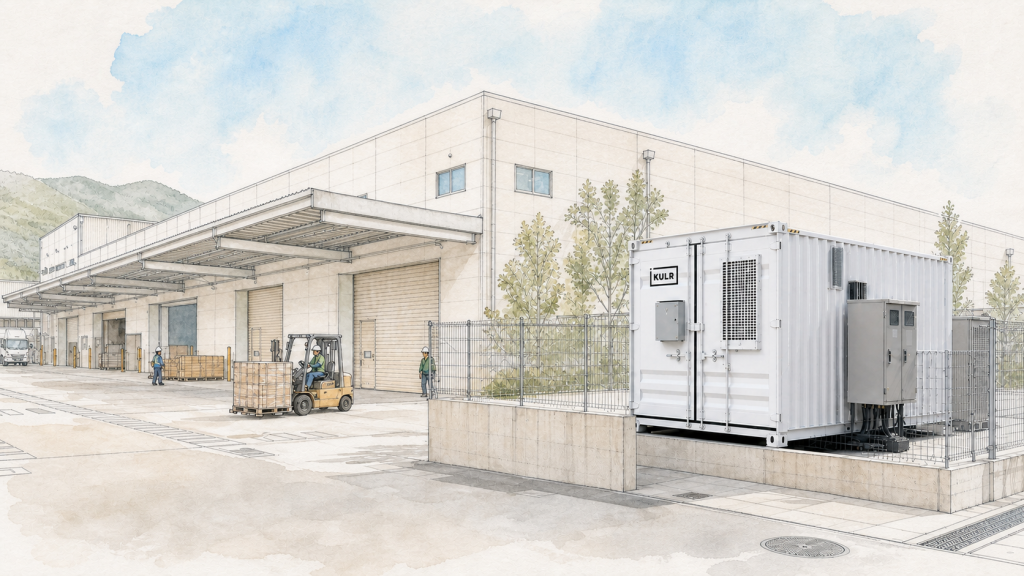
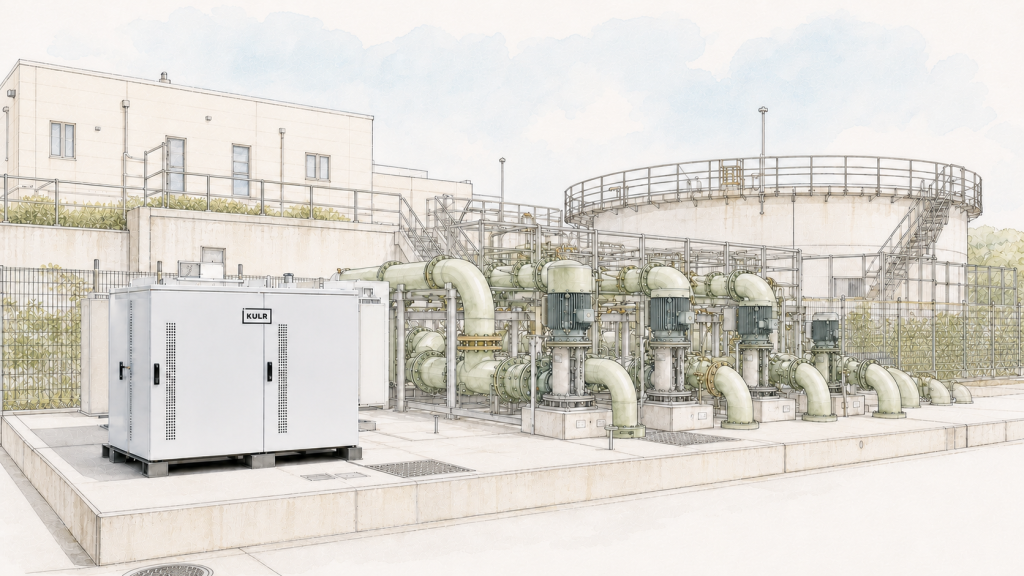
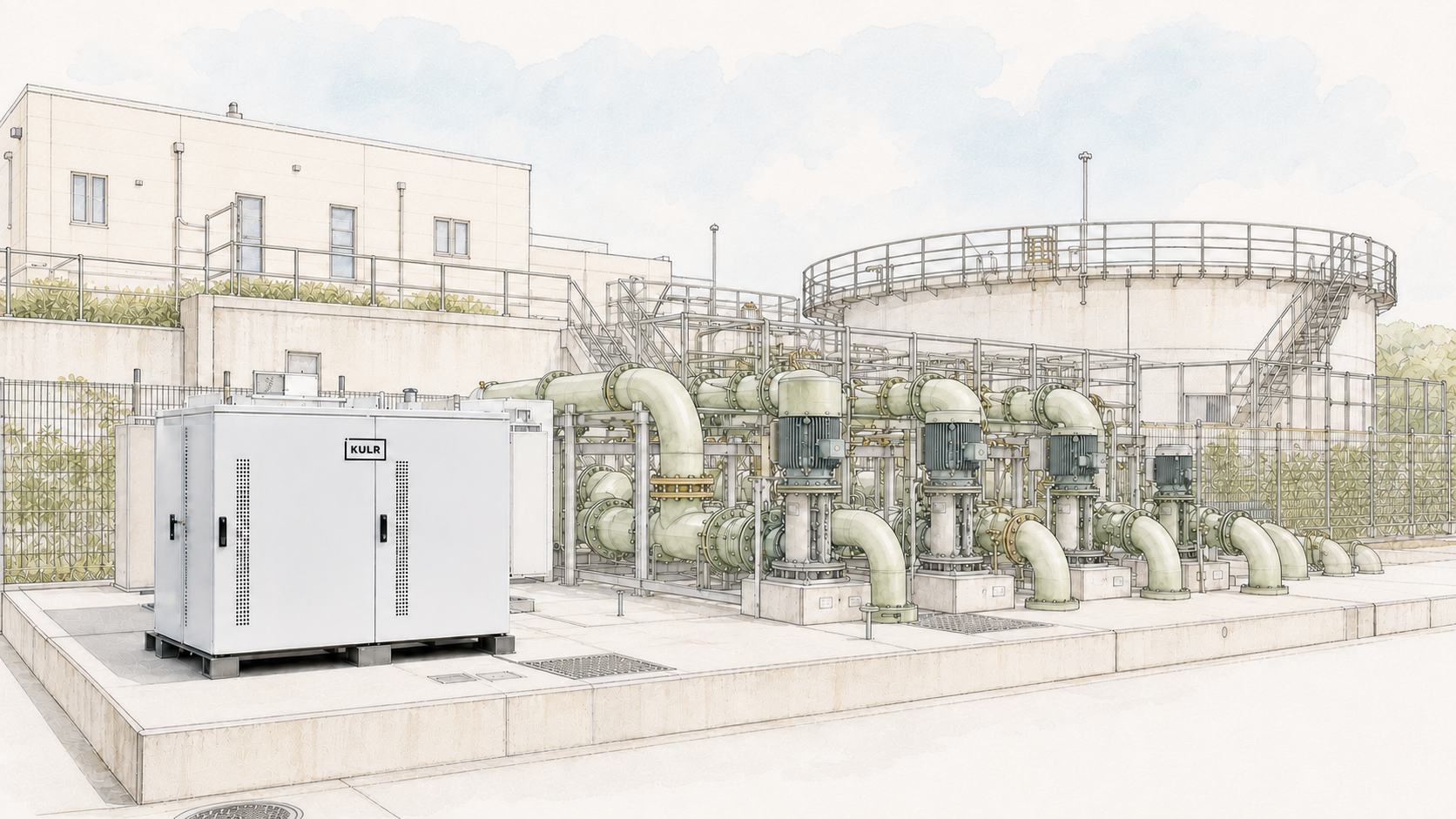
Energy storage installed on the grounds of a municipality or a facility. KULR owns the equipment and handles operation and maintenance.
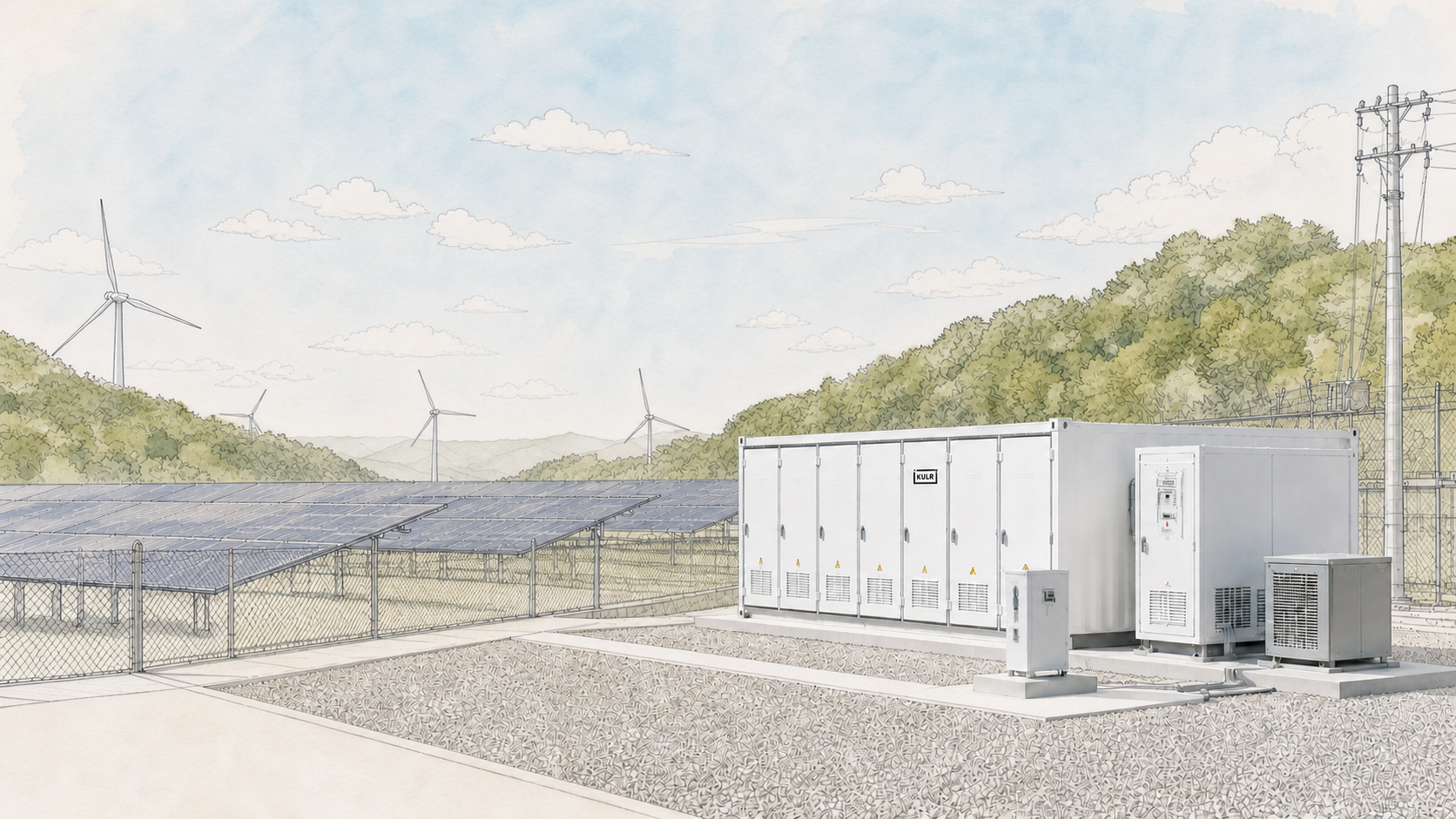
Renewable energy, peak demand, business continuity, backup power.
OVERVIEW
Store electricity, and use it when it is needed. This is energy storage installed on the grounds of a municipality or a facility. With enough space on the grounds, capacity can be large. How much electricity, and at what hours: the configuration is decided from there. KULR owns the equipment and handles installation, operation, maintenance and remote monitoring; outright purchase is also available.
Electricity generated at midday, used in the evening or at night. Nothing is wasted when generation and consumption do not line up.
Switch to stored electricity only during the hours when demand peaks. It holds down the peak drawn from the grid.
For equipment that cannot stop during an outage, in government offices, factories, and similar facilities.
The site also becomes a place with power and connectivity. It can host equipment that needs a secured power supply, such as surveillance cameras and measuring instruments.
TWO MODELS
Both are available.
The differences are who owns the equipment and how it is paid for. Design and installation, maintenance and remote monitoring are handled by KULR in both cases.
ENERGY AS A SERVICE
PURCHASE
WHAT'S INCLUDED
From deployment to operation, as one package.
A battery on its own cannot be used safely over time. A BMS to watch the state of the cells, control to decide when to charge and discharge, monitoring to notice a fault from a distance, and day-to-day operation. KULR provides all of it as one, from installation through operation. There is nothing to arrange separately.
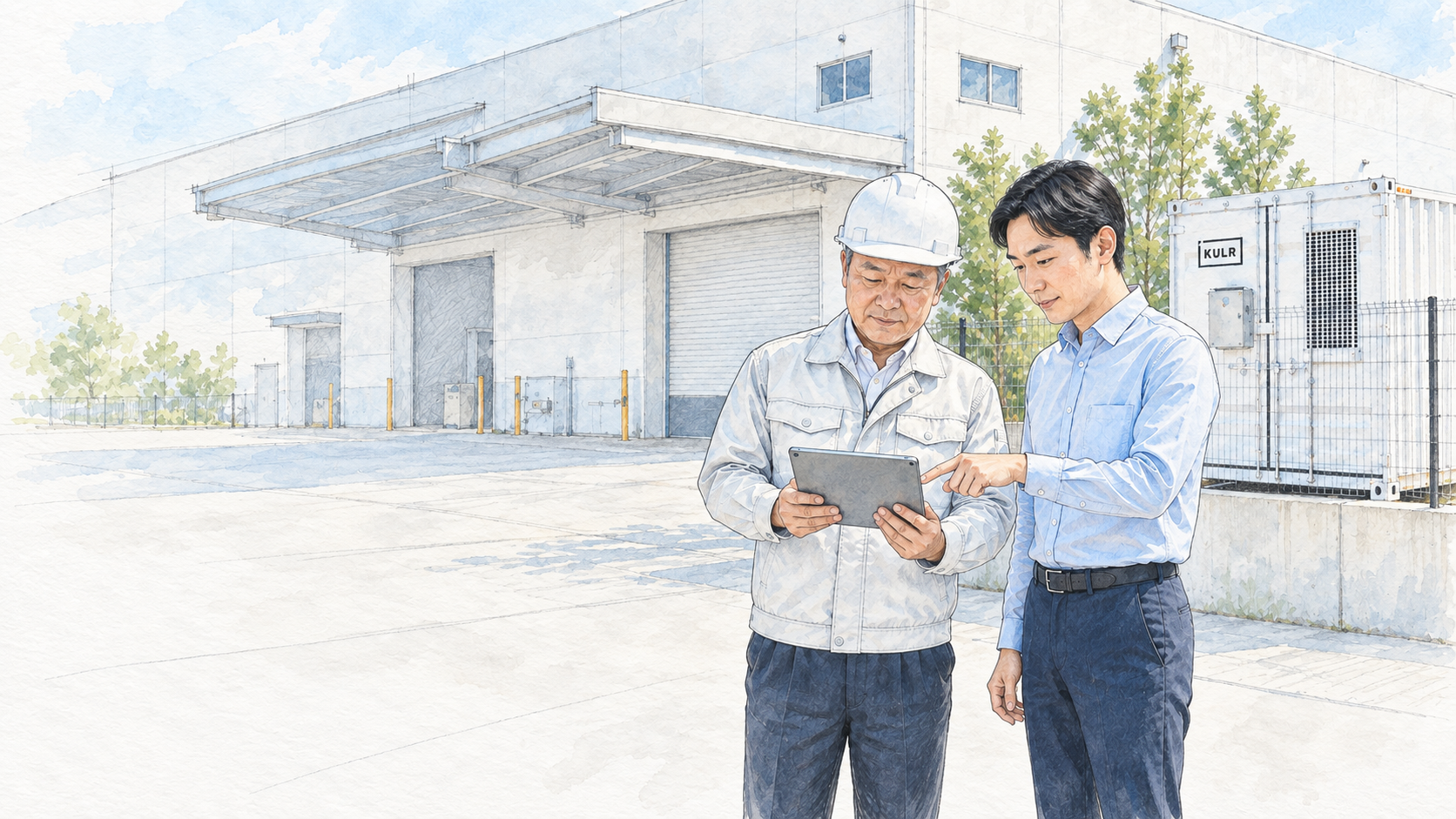
The installation location is decided together with the customer.
The system is configured for the application and the capacity required, and installed.
Periodic inspection, equipment checks, and maintenance, on an ongoing basis.
Operating status and equipment condition, checked over the network.
APPLICATIONS
Once installed, the equipment immediately serves both everyday power use and emergency readiness.
PRICING
It starts with the plan.
Equipment configuration and installation conditions differ from one customer to the next. Costs are calculated individually, based on what we learn about the plan. The quote includes operation and maintenance after installation, as well as remote monitoring.
How much power, for how many hours.
The number of units required, and the configuration of the whole system.
Installation conditions, electrical equipment, and the communications environment.
The period of use, for service contracts.
How the system is operated day to day, such as peak shaving and normal power use.
ESTIMATE
A preliminary estimate of cost and configuration can be provided.
Even before a location or a configuration is decided,
an outline of the expected scale and application is enough.
From that, we prepare a document summarizing preliminary cost and configuration.
PROCESS
From the first conversation to the start of operation, in seven steps.
We review what is known so far: the application, the scale, and so on.
Installation conditions, electrical equipment, the communications environment, and candidate sites.
We put together the configuration and the deployment method, and present the cost.
Terms are set for purchase or for service.
The location is decided and the installation conditions are confirmed.
The equipment is installed and the necessary work is carried out.
The system goes into operation, with monitoring and maintenance continuing from there.
FAQ
Yes. In addition to use as a service, outright purchase is available.
Under the service model, KULR owns the equipment. What happens at the end of the contract is set out in the contract terms.
TECHNOLOGY
Battery technology developed for space, aviation, and data centers.
KULR Technology Group, listed on the NYSE American, has developed a body of battery technology on the foundation of more than 40 years of thermal management and flight-qualified design. KULR combines that foundation with energy storage systems for the Japanese market, aiming at safe and reliable energy infrastructure.

Chosen for the application, from a library of more than 90 cells.

Monitors cell condition and detects anomalies early.

If one cell goes into thermal runaway, it does not spread to its neighbors.
CONTACT
Mobile energy storage, disaster resilience and BCP, power for critical infrastructure, battery technology — we are ready to talk from the planning stage.