
MOBILE ENERGY STORAGE
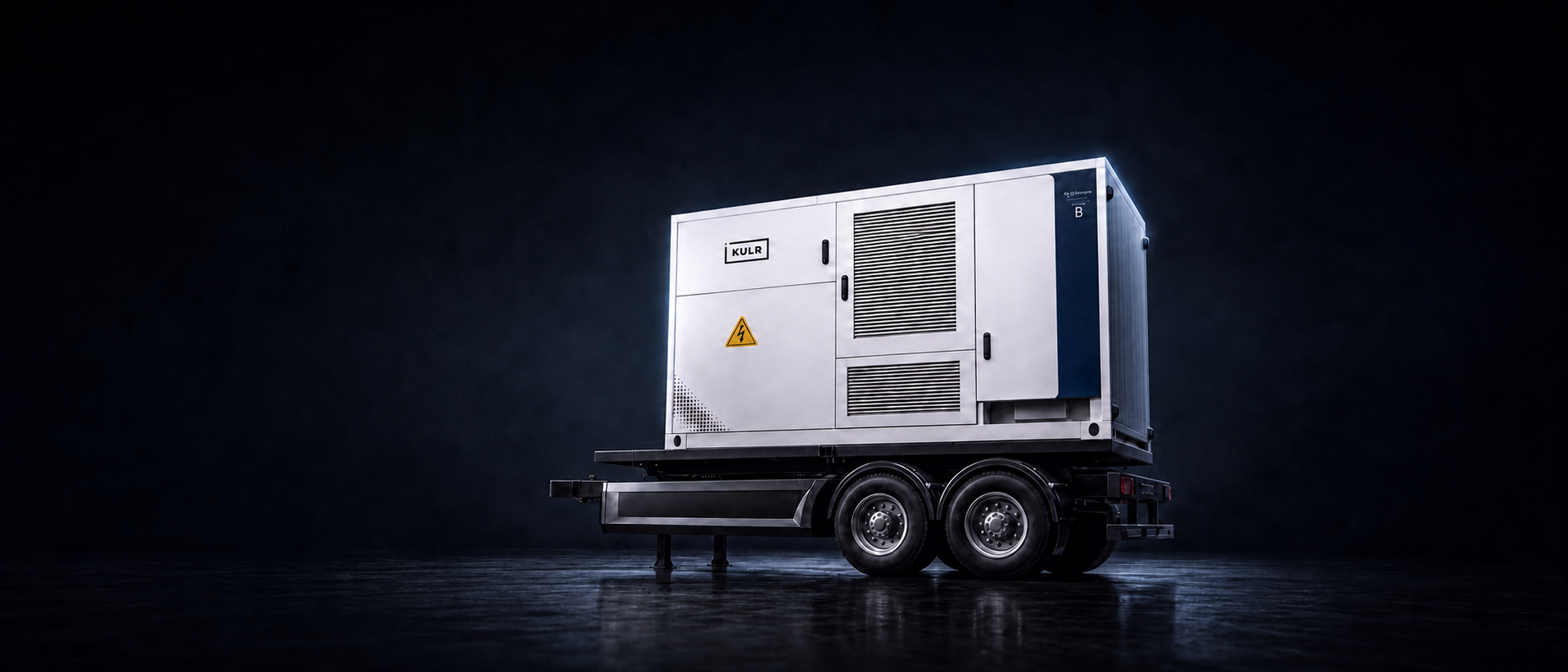
Enesilience Mobile Energy Storage System
The power you need, where you need it, when you need it.
A mobile energy storage system with power, connectivity, and information in a single unit.
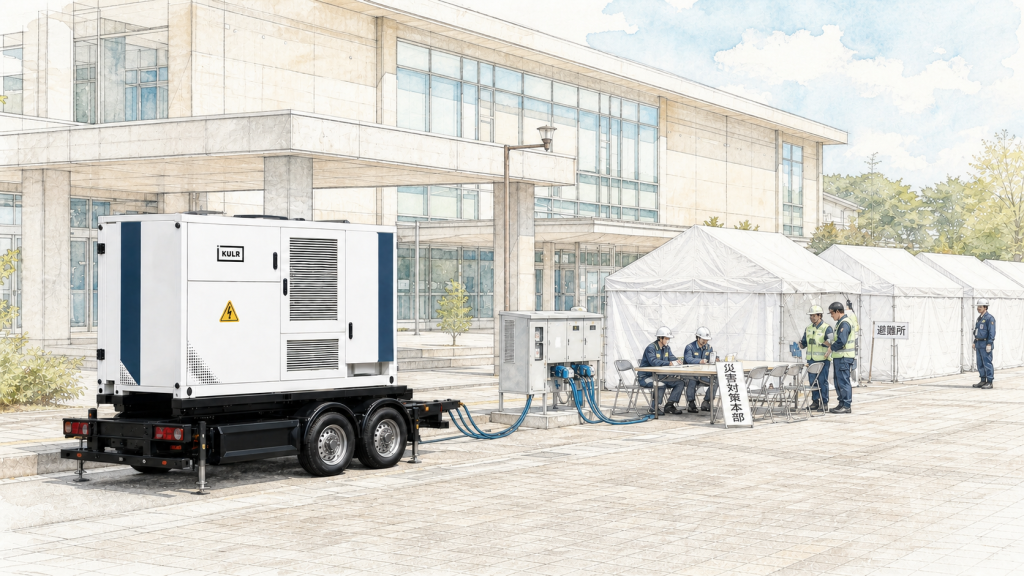
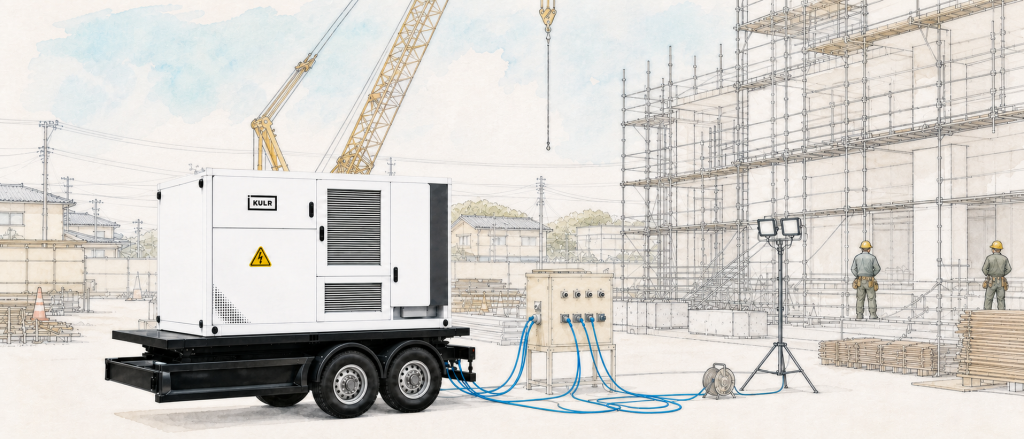
From emergency power in a disaster to construction sites, events, and EV charging.
Stored energy, moved to where it is needed.
OVERVIEW
Energy storage, as infrastructure that is not tied to a place.
When a disaster or an outage strikes, the place that needs power and the place where the energy storage equipment is installed are not always the same.
Enesilience puts a large-capacity battery on a semi-trailer. It moves to where it is needed and supplies power on the spot. When the battery is depleted, it recharges at a nearby fast-charging facility and returns to the site.
FEATURES
Mobility, safety, and scalability in one unit.
Features
-
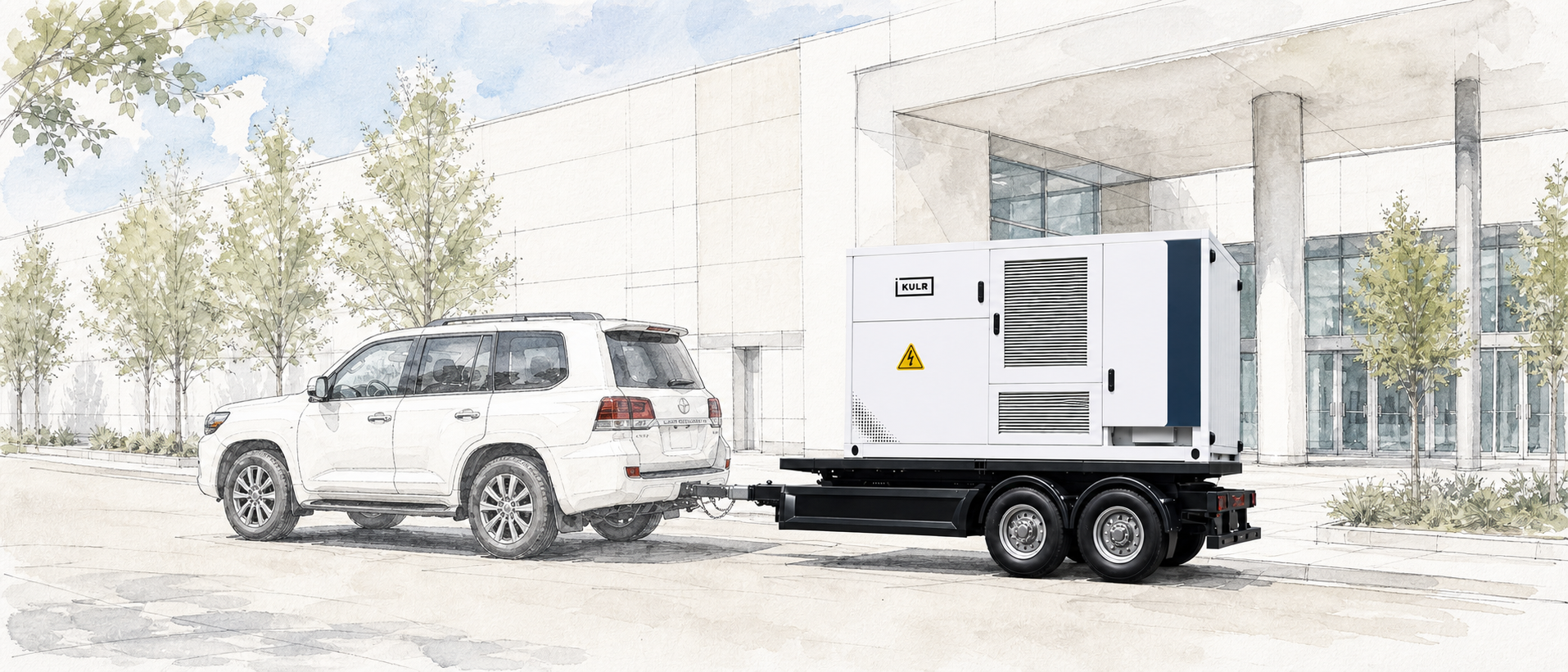
Semi-trailer design
Highly mobile. It moves to where it is needed and operates there.
-
Safety and long life
A 140.08 kWh lithium iron phosphate (LFP) battery.
-
Power supply and EV fast charging
AC power supply, plus a charging stand output of up to 120 kW via CHAdeMO and NACS.
-
Connectivity
Ethernet, 4G and 5G, and Starlink. Communications infrastructure is built at the same time as power.
-
Modular design
A structure that makes operation and maintenance easier.
-
Remote operation
Supports system configurations for equipment monitoring and operations management.
-
Reliability
Operating temperature of −20 to 50 °C and IP54 ingress protection. Designed as an emergency power source.
OUTPUT
Output that equipment on site can use directly.
Three-phase 200 V. It covers the current that motor-driven equipment needs at startup.
Air conditioners in evacuation shelters. Drainage pumps in a flood. Much of the equipment that has to run at a disaster site has a motor, and a motor draws more than its rated current at the moment it starts. Enesilience was designed with that site in mind.
-
Three-phase 200 V / Single-phase 100 V and 200 V
Matches the equipment on site.
-
Motor-driven equipment
Handles the high current needed at startup.
-
CHAdeMO / NACS
Fast charging for EVs.
-
Expandable up to 4 units
Output and capacity can be added.
LIFE RESILIENCE
Keep the power on.
Keep people connected.
Keep information moving.
Enesilience supports more than power.
Satellite communications and Wi-Fi secure a communications environment in an emergency. Contacting family. Sharing photos and information about the damage. Life Resilience for a community means connecting people to people, and the community to information, not only supplying power. Being able to move the energy itself to where it is needed is what makes this possible.
-
Power supply
To evacuation shelters, facilities, and equipment.
-
Connectivity
A communications environment secured through 4G, 5G, and Starlink.
-
Monitoring
A view of conditions on site through cameras and monitoring equipment.
-
Mobility
Moves to where it is needed.
APPLICATIONS
As a power source. As a communications hub.
For places where power and communications are hard to secure.
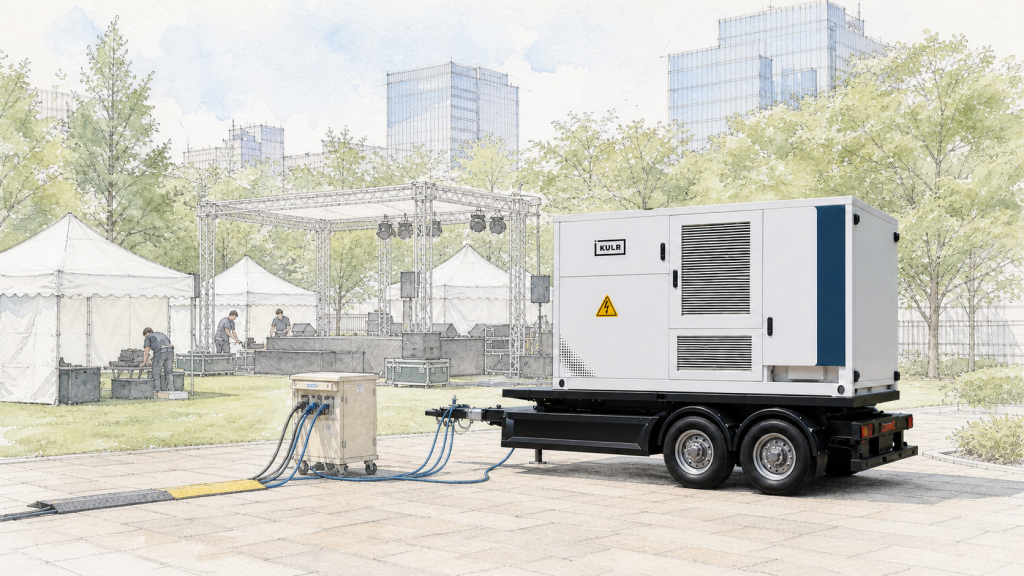
STANDARD CONFIGURATION
With four units, eight spot coolers can run continuously
for the three days after a disaster.
Up to four Enesilience units can be linked. A four-unit configuration stores about 560 kWh. That is roughly 80 hours of continuous operation for eight spot coolers*, 42 hours for fifteen, or 32 hours for twenty.
It moves. So units can take turns recharging.
Before the power runs out, some of the units go to a nearby fast-charging facility and come back. Run that way, the site can be kept powered beyond 72 hours. Unlike a diesel generator, there is no fuel to keep hauling in.
* Assumes the single-phase 100 V, single-outlet type widely used on construction sites (rated power consumption 880 W at 60 Hz).
Note: Runtime is an estimate: storage capacity of 140.08 kWh × 4 units = 560.32 kWh, divided by total power consumption. In 50 Hz regions the same model draws 720 W, so runtime is somewhat longer. Conversion losses and ambient temperature can shorten it.
Note: Rotating units for recharge assumes a usable fast-charging facility nearby.
SPECIFICATIONS
Specifications
AC InputAC INPUT
| Voltage | Three-phase 200 VAC ±10% |
|---|---|
| Power | 54 kW |
| Frequency | 50Hz / 60Hz |
| Current | 200 A |
DC InputDC INPUT
| Rated input | 69.12 kW |
|---|---|
| Maximum current | 150 A |
| Voltage range | 403〜518 V |
| Interface | CHAdeMO |
AC OutputAC OUTPUT
| Voltage | Single-phase 100 / 200 VAC, three-phase 200 VAC |
|---|---|
| Power | 49.5 kW |
| Frequency | 50Hz / 60Hz |
| Expandable up to | 4 |
Charging StandCHARGING STAND
| Power (single channel) | CHAdeMO 120kW / NACS 120kW |
|---|---|
| Voltage range | 200〜950 V |
| Charging connectors | 1 |
| Cable length | 5 m |
Basic ParametersBASIC PARAMETERS
| Storage capacity | 140.08 kWh(LFP) |
|---|---|
| Weight | 2.8 t |
| Dimensions | 4000 × 1600 × 1350 mm |
| Operating temperature | −20〜50 ℃ |
| Ingress protection | IP54 |
| Network | Ethernet / 4G, 5G / Starlink |
ENERGY AS A SERVICE
We provide the everyday: power that is simply there.
A service by default. Outright purchase also available.
KULR's standard model is a service: we own the equipment and provide it together with operation and maintenance. Outright purchase is also available. The aim is a way to secure the energy that is needed, without the burden of buying and maintaining equipment for emergencies alone.
-
Access to equipment
Systems owned by KULR, available for use.
-
Operation and maintenance
From periodic inspection to parts replacement, handled by KULR.
-
Remote monitoring
Operating status and equipment condition, monitored by KULR.
-
Cost
Deployed without a large upfront investment. Predictable operating costs.
CONTACT
Tell us about your energy challenge.
Mobile energy storage, disaster resilience and BCP, power for critical infrastructure, battery technology — we are ready to talk from the planning stage.